Tips

Please take your time and read the blog rules

Apr 3, 2013

IS-7 - history and development


Author: Viktor Kitov (EU forum)
Published and slightly redacted by: Silentstalker

Today, we have a guest article here by Vikto Kitov about the IS-7. Enjoy!

In the spring of 1944 after  lifting the siege of Leningrad at the Kirov plant which was partially destroyed, it was decided to manufacture the ISU-152 self-propelled artillery. Tank designers were returning to the Experimental Plant № 100, after the evacuation. The leader of the team was chosen to be J. Kotin. Under his leadership, the development of a new heavy tank which was to be well armed and heavily heavy armored. Itreceived the factory designation "Object 260", and later - the index "IS-7"

-A wooden model of the IS-7-


The high level of protection of IS-7 was provided not only by an increase in the thickness of armor plates, but also due to their significant slope. The form of the front was similar to the IS-3 - "pike nose," with somewhat smoothed contours. The mass of IS-7 reached 68 tons, to ensure adequate mobility it was needed to increase the capacity of the engine. It was planned to install two diesel V-11 or B-16 with a total capacity of 1200 hp, using an electric drivetrain similar to the tried and tested on the prototype tank IS-6 ("Object 253"). However, before making the first prototype of the IS-7 the design was canceled and only a full sized wooden mock-up was build. In 1946 work on the second version started. In the same year it was decided to build two prototypes. The lead designer of the machine was engineer G. Efimov, and overall management was done by A. Ermolaev. A second version of the IS-7 would be created, rather diffrent from its predecessor.

-Engine-

Since work on the B-16 engine failed. The TD-30 diesel engine was installed, developed  on the ACh-300 aircraft engine. Instead of an electric transmission a traditional mechanical one was used. A serial V 12-cylinder diesel engine M-50 1050 hp at 1850 RPM was installed (used on fast offshore boats). The TH-30 aircraft engine established on the basis of ACH-300, revealed a number of significant drawbacks during the tests. The M-50 engine was distinguished by its rather large dimensions, requiring new design solutions for its installation in the tank without increasing the height of the housing. They had to develop a new short torsion suspension (so-called "beams"), consisting of seven thin rods, and such that was enough space for the engine crankcase. The case height of 2426 mm was even lower than the 300 mm on the IS-2, and 24 mm lower then the IS-3.

-Engine specifications-


Engine Type: M-50T

Manufacturer: Plant № 800
Brand: M-50T
Type: Diesel
Volume: 62,400 cm3
Maximum power: 772 kW (1050 hp) at 1850 rev / min
Maximum torque: 4606 Nm
Configuration: V12 Cylinders: 12
Bore: 180 mm Stroke: 209.8mm
Degree of compression: 13.5
Cooling: Liquid
Stroke(number of cycles): 4
Recommended fuel: DL, DZ, DA

Speed​​  60 kp/h; Cross-country speed 32 kp/h
Range- 300 km
HP per tone- 15.4
Suspension- Individual torsion
Ground pressure kgf / cm ² 0,97
Fire fighting equipment with automatic thermo sensors which activate at 100-110 ° C


-Transmission-


The transmission for the tank was designed in two versions. The first, which was manufactured and tested in the IS-7, was a six-speed manual shift with synchronizers. Turning mechanism - a planetary, a two-step. Steering was done via a hydraulic servo.Tests showed good traction transmission quality, ensuring high average speed of the tank. The second version of the manual transmission had been developed in conjunction with the Bauman Moscow Higher Technical School.It was a planetary, 8-speed. Steering was done by hydraulic actuators with progressive gears. For the first time in the soviet tank design tracks were made with rubber-metallic hinges, hydraulic double acting shock absorbers, road wheels with internal shock absorbers operating at high loads and torsion beams.

-Electric Drive planned for the IS-6-

The first copy of the prototype was ready on September 8, the second - December 25, 1946. On field tests they showed remarkable speed for such machines- 60 km/h maximum speed and an average speed on rough road was 32 km/h. None of the heavy tanks of that time could boast with such high-speed characteristics.

Throughout 1947 in parallel with the long trials of the first two IS-7s work started on the creation of the next - better - option.

Increased armour and slope for the hull and turret after firing 88-mm, 122 mm and 128-mm shells at the prototypes on the NIIBT site at the Izhora factory. The thickness of the frontal plate was increased to 150 mm, placing them under  vertical angles of 50 ° - 52 °. The turret was given a less vulnerable form - it became more rounded, the thickness of the front was adjusted to 240 - 350 mm at an angle of 45 ° - 0 °, the side plates - to 185 - 240 mm at angles of 30 ° - 45 °. Even the most powerfull guns existing at that time (128-mm and 130-mm armor-piercing projectiles) failed to penetrate the armour.

-Crew-

The crew of the IS-7 consisted of five men and four of them were placed in the turret:

Commander - Right
Gunner - Left
Two Loaders - In the back, they also operated the machine guns.
The Driver was the only one to be located in the hull.


-Armament-


The first prototype was armed with a 130-mm S-26 gun. It used separate-case ammunition, the mass of the projectile was 33 kg. To increase the rate and ease the work of the crew a pneumatic loading mechanism was installed, developed in conjunction with the Institute of artillery.

The next version of the IS-7, was armed with a new 130-mm naval gun S-70 (7020mm long) a 54 caliber barrel and it's weight was 4225kg. The shell had a mass of 33.4 kg and an initial velocity of 900 m/s with the ability to punch through 163-mm armor, mounted at an angle of 30 °, at a distance of 1000m and 143 mm - 2,000m. Rare of fire was from 6 to 8 shots per minute thanks to the naval style "rammer" (Unconfirmed)

-S-70 Penеtration values-

Shell \ Distance--------------------------------->500---1000---1500----2000---3000 (m)
БР-482 (Angle of impact 30°)----------------->205-----195-----185----175------145 (mm)
БР-482 (Angle of impact 90°)----------------->250-----240-----225----210------180 (mm)

Keep in mind that at different times and in different countries, different methods for determining armor penetration were used. As a consequence, a direct comparison with similar data from other sources is often impossible or incorrect

-Details about the IS-7s guns-

Ammunition for the S-70 consisted of 30 shells. Rather then the bulky pneumatic loading mechanism that was used on the first machine, a smaller chain mechanism with the electric drive was developed. The characteristic difference between guns was the muzzle brake design: The C-70 used small holes, and a C-26 has a slot design.

The tank fire control unit  provided guidance, regardless of the position of the gun and fired automaticly as soon as there was a target lock. The number of machine guns on the IS-7 reached eight: Two - large caliber, and the rest - 7.62 mm RP-46. A second CPV-44 was aded on the roof of the turret for firing at air and ground targets. Aditionally two 7.62 mm machine guns and a 14.5mm were mounted in the gun mantlet. All of them had a remote control. Ammunition for the machine guns consisted of: 400 rounds of ammunition for the CPV and 2500 for the ER.

-The End-

During 1948 LKZ produced four prototypes of the new IS-7.

Following the factory tests they were handed over to the state. Chairman of the State Commission was appointed Major-General A. Owl. The main test of the Ministry of Transport Engineering of the USSR E. Kulchitsky well remembered these trials: "I was honored, I was asked first to give this remarkable machine"...With speeds exceeding 60 km/h, this heavy machine is easy to respond to the slightest force applied to the levers and pedals.The machine is totally submissive to the driver."
[/left]
During a test run one of the tanks caught on fire after exeeding the period for the trials. The automatic fire extinguishing system activated twice, but the fire could not be contained. The crew had to leave the tank, and it was completely destroyed. The plastic fuel tanks, which the designers installed instead of the normal metal ones to save weight, turned out to be the source for an additional fire hazard.

Despite the outstanding performance, the IS-7 failed to receive the approval of the State Commission.

In addition to a number of failures during the test, a negative opinion of the commission affected, first and foremost, it is was too heavy. The attempt to provide the highest level of protection brought the machine to a record 68 tons - instead of the planned 65.5 tons.

The "Object 260" was not accepted for service. However, in the course of the project designers  accumulated experience, and in the later types of Soviet tanks you can see many of the tried and tested to IS-7 components.

-Why?-


A definite negative role in the fate of the IS-7 played another heavy tank -the 60-ton IS-4, developed and put into production at the CHKZ in 1947, after the cessation of production of IS-3. The IS-4, at the time of its creation, had the most best armor, but the  transmission wasnt reliable. It was armed with the same guns as the IS-2 and IS-3. The biggest drawback of the IS-4 was the fact that its mass was greater than the capacity of railway platforms, and highway bridges simply couldnt withstand its weight. As a result the IS-4 effectively discredited the idea of ​​a tank weighing 60 tons, which caused the skepticism of military experts regarding the IS-7.

Another explanation for the rejection of the IS-7 is that at that time the concept of increasing the role of tanks in a probable nuclear war, called for an early deployment of a large number of armored units, and thus to produce the greatest possible number of tanks in peacetime.

Blueprints and comparison


The last IS-7 (Model 1948) is in the Museum's collection of armored vehicles in Kubinka.


Apr 2, 2013

Just a few notes regarding this blog

Silentstalker

Hello everyone,

just a few technical notes regarding this blog.

1) We are getting bigger and people start to notice. Most of the time that's a good thing, but sometimes, it ain't. With that being said, I was contacted by some guy, who told me I might potentially have a problem with using the Tanith First And Only logo as my avatar, because it's copyrighted and bla bla bla. Well, whatever, I changed it to a different picture (drawn by a very talented young woman just for me no less!), I hope it's not too confusing.

2) With another author (and potentially more in negotiations) writing for this blog regularily (Zarax), people might get confused about the authorship of articles. Therefore, every article will from now on contain a name of the author as first thing - with different colours for fast identification. I'm red, Zarax will pick a different color. I hope that's helpful.

3) Recently, I had to purge a certain thread with several comments for being incomprihensible. People, these aren't the official forums, so I won't enforce English at all costs, but please do NOT spam in your language, especially some I can't understand :) Use English if possible, even if it's a broken one.

4) The amount of anon comments is getting ridiculous and it's really hard to sift thru. Please, even if you write as anons (CBA registering or whatever other reason), DO include some sort of identification in the comment. I don't care if it's your first name, ingame tag or something random - just something so it's totally obvious to what people are replying.

Thank you.

With that being said, I have a question for you all: what do you consider to be the biggest Wargaming fails? Please write your opinions in comments!

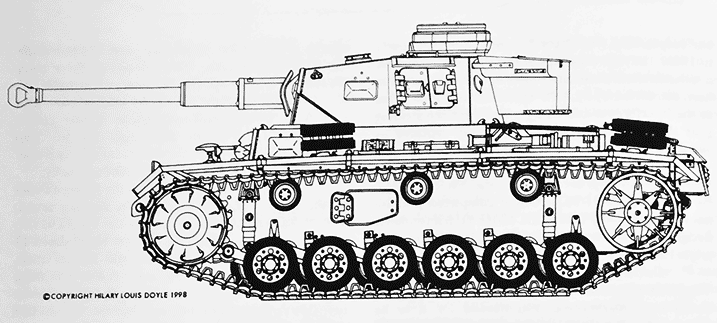
"Buff my tank!" - Panzer III

Hello and welcome to the first edition of "Buff my tank!"

The "Buff my tank!" articles are meant as an historical way to look at some tanks considered underpowered in game and ways to improve their combat abilities discussed by the original german engineers.
Beware that while being sometimes ironic in tone, the article treats about both costs and benefits of every choice and it most likely will never be listened by WG as suggestion.

Panzer III... almost the perfect MMO tank.
It has been "buffed" several times during its historical operational life, but ultimately it faced its demise as it was hopelessy outgunned by T-34 and KV tanks, while being in trouble returning fire as both 5cm and 7.5cm L/24 cannons were effective only when firing special ammunition such as APCR or HEAT.

In game the situation is pretty much the same and we will be using Panzer Tracts 20-1 to showcase a possible tank modification.
While being an agile and reasonably armored medium good versus its tier IV peers, its gun selection is rather anemic against most tier V enemies.
This made many players (especially the less experienced ones) ask for a buff of the tank as it can be rather dependent on "gold" ammunition when not top tier.

Historically, german engineers faced similar troubles and of course raced to find alternate solutions.
APCR was a short term patch, although an expensive one, while operationally the Panzer III ended up being replaced by the rearmed Panzer IV with the 75mm L/43 and L/48, while the chassis itself found its second life as STUG III.

The Panzer III/IV was another solution that found itself on prototype stage while its chassis powered again some (rather good) self propelled guns, but in game it is already represented as a tier V tank.

Still, this was not the first attempt to merge the two tanks:

In december 1941 Krupp was requested to mount the Panzer IV turret in a Panzer III chassis, and by the end of the year a preliminary design was ready:


Thus, the Panzer III Ausf K was born.
As "pimp my ride" was not on TV yet, calculations were started and the price to pay was a large increase in weight, meaning new tracks and suspensions were needed, as well as the fact that mobility was surely impacted despite the best design efforts.

In game terms this is a very similar situation to the old Pz IV with Panther narrow turret.
Estimating with game stats, it means over half a ton extra weight without taking into account any ancillaries and going by "Wargaming Engineering".
As the in game improved suspensions limit is set at 22.65 tons so it could be doable and using the top 440HP engine even power to weight ratio still looks good enough so mobility shouldn't be affected overall.


It looks almost too good to be true, right?

To balance this, unfortunately reality strikes with a huge nerfbat.

Mounting a bigger turret without serious modifications to the hydraulics means that rotation will become a lot more sluggish, prone to failure or will plainly require manual cranking.
This means in game a greatly reduced turret rotation.

Mounting a more powerful gun on a lighter chassis that is already unbalanced by an heavier turret means that recoil will have a stronger kick.
This translates in lowered accuracy, increased aim time and gun dispersion.

Oh, did I mention the designers saw the modification would affect the center of gravity?
Say hello to terrain passability and track rotation nerf.

Finally, bigger gun on a smaller tank?
Less ammo of course.

The final verdict:

Doable, but it will transform german ergonomics into a disguised mid-tier french tank.

Are you sure you want to pay the price?

Thank you for reading and see you in the next article!

2.4.2013

Half of the answers are still trolling, mostly related to the dog in the garage (apparently, it's a demon dog, feeding on souls of destroyed tanks and you have to destroy enough tanks to make it go away). Had to skip all kinds of garbage.

- a failure of a player to prevent your base capture is not considered a reportable offense
- reporting profanity/spamming does not automatically lead to an instant chat ban, it's re-checked by moderators
- the Korean "8.4.1" patch with such features as an afterburner is simply a Korean April's fool
- there won't be crew visual models implemented into the game
- IS-7 won't get HEAT shells because there were none historically
- Q: "Why does the dog in the garage howl?" A: "It's historical" (followed by a link to the Soviet adaptation of the Hound of Baskerville)
- the idea to make various hulls as modules was scrapped
- 0.8.5 test might start on Thursday (just a hint)
- battle fixing (for example two companies of "friendlies" that get to fight each other so one player gets 15 kills) is a banneable offense
- the T-28 Soviet tank  is the serial model, not the prototype, despite having the historical prototype's weight

A short introduction

First of all, I would like to thank Frank aka SilentStalker for hosting me as author.
While I'm not a proper tank academic historian I do have a passion for both tanks and historical details.

Over the years I managed to get several good books about german (and other nations as well) tank development and made several threads about historical details in WOT EU forums (Zarax999).

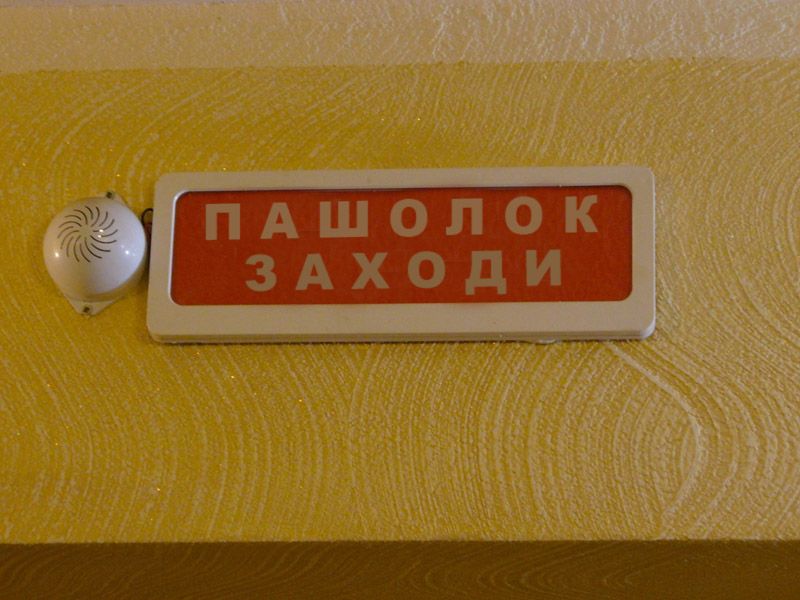
As supertester I tried to persuade Pasholok about some historical mistakes without success and now that the position is closed I can properly write without being in a conflict of interest.

My articles features mostly Jentz, Doyle and Spielberger as sources although sometimes I will delve speculatively on industrial developments meant for other branches of the Heer.
Expect from me WOT tech tree related articles from me with an historical focus, although sometimes controversial.

Oh, and whenever WG is spotted overstretching history (as in making up tanks or glaring mistakes in specs) you'll see WG "batman sign" for their official tank expert:


I would like to thank WG developer cannoneer for the image, it's been priceless for me :)

Official 8.5 english tank descriptions

The official leaked english descriptions of the 8.5 vehicles. I think that considering the 8.5 patch notes leak and the fact this blog is now officially banned on the EU forums, it hardly matters anymore. Also, as for the DW2 description - as far as I know, that tank was not tested, so I have no idea what is it doing there.

Excelsior
At the end of 1942, the Churchill tank's armament was deemed insufficient. New tanks, the A31, A32, and A33 were developed as new infantry tanks. The A33 was developed by the English Electric Company. The LMS Company participated in the development of suspension for a new tank. Two vehicles, which differed greatly from each other, were manufactured. The A33 was set to go into production, but in 1943 the decision to cancel mass production of the Churchill was reversed, and the order for the A33 was not placed.

Sexton I
In 1943 the Montreal Locomotive Works started mass production of the Sexton SPG, developed on the basis of RAM II. A total of 2150 vehicles were produced by 1945, of which 125 were designated the Sexton I.

Aufklärungspanzer Panther
Planned heavy reconnaissance vehicle. The plans called for using the Panther hull in order to facilitate rapid mass production. The vehicle was to feature the Leopard turret with a gun not longer than the tank's hull, which was to ensure maneuverability in forested terrain. No prototypes were built.

Durchbruchswagen 2
Prototype heavy tank. Developed by the Henschel und Sohn Company as part of a heavy tank program. A prototype was built in 1938. However, in September 1939 the VK 30.01 project was preferred, and the DW program was officially canceled. Nevertheless, the DW I and DW II prototypes were used extensively for testing purposes until 1941.

Indien-Panzer
The project was developed as a medium tank for the Indian Army. The work on the project was carried out by Porsche, Daimler-Benz, and Zahnradfabrik AG of Friedrichshafen. However, the vehicle was deemed to be too complicated for production in India, and the project was canceled.

Leopard 1
Main battle tank of the Federal Republic of Germany. Development was started in 1956. The first prototypes were built in 1965 at the Krauss-Maffei factory. The Leopard 1 was in service in more than 10 countries.

Leopard prototyp A
Prototype developed from 1961 through 1962 as a medium tank for the Bundeswehr, with a total of 26 prototypes manufactured. The prototypes were tested up to 1963. The vehicle was the predecessor of the Leopard medium tank.

VK 20.01 (D)
Prototype of a medium tank developed by Daimler-Benz from 1939 through 1941. The new vehicle was to become a new standard medium tank of the Wehrmacht. The prototype was deployed on the Eastern front. Combat testing revealed a number of serious faults. In 1941 the tank was deemed obsolete, and the project was canceled.

VK 30.01 (D)
In the winter of 1941–1942 the WaPrüf 6 issued technical requirements for a new 30-ton tank. The orders for development were placed with MAN and Daimler-Benz. The prototypes were to be ready by May 1942. However, on May 13th, 1942 only comparative characteristics of the projects were submitted. The MAN's project was preferred, and the Daimler-Benz's project was canceled.

VK 72.01 (K)
A superheavy tank with rear placement of the turret. Developed by the Krupp company. A new vehicle was to have stronger armament and enhanced armor compared to the VK 70.01. Existed only in blueprints.

M60
The M60 was a deep modernization of the M48 tank. Development of the prototype was started in 1957, and in 1959 the order for production of the first tank was placed with Chrysler.

Object 907
The decision to start the development of medium tanks of a new generation was made on December 13th, 1953. Development was carried out by Research Institute No. 100. The project was submitted in March 1953, and at the beginning of 1955 the hull of a new vehicle was tested for shell resistance. However, later the project was canceled.

T-60
Developed in August 1941 at the Construction Bureau of Plant No. 37 under the supervision of N. A. Astrov. The vehicle came into service in September 1941, and was mass-produced until February 1943, with a total of 5920 vehicles manufactured. The T-60 tank was in service until the end of the war.

T-70
Developed in October and November 1941 at the Construction Bureau of the Gorky Automobile Plant under the supervision of N. A. Astrov. The vehicle came into service in January 1942, and it was mass-produced until October 1943, with a total of 8231 vehicles manufactured. Some vehicles were used until the end of the war.

T-80
Developed in the summer and fall of 1941 at the Construction Bureau of the Gorky Automobile Plant under the supervision of N. A. Astrov. The vehicle came into service in December 1942. A total of 85 vehicles were mass-produced.

Welcome Zarax!

I'd like to welcome Zarax, our new blog author from Italy!

I suspect he'll be writing on the topic of German tanks mostly, as that is his speciality. He has a huge knowledge (obviously surpassing my own) in that field, I am sure many will find his historical articles interesting.

As for other people: if you have an article you'd like published under your name, or simply have something to say, feel free to contact me either thru the site Facebook page, or at fortherecordwot@gmail.com

Silentstalker