First part can be found
here
Second part can be found
here
Crimea and Romania
After the destruction of Romanian armored forces at Stalingrad, Romanians found they couldn't replace the heavy losses easily. By January 1943, frontline armored units were practically annihilated, with the only vehicles salvaged from the front being those that were in repair shops at the time of the battle. Broken Romanian units were thus recalled to Romania for refit and rest.
The obvious (and pretty much only realistic) source of new armor for Romania would be the Germans, therefore Romania asked once again for permission to buy (!) German equipment. Germans - who
a) themselves didn't have that much to spare and
b) still proceeded with screwing their allies
responded with promising Romania 50 (obsolete and used, but company-refitted) Pzkpfw.38(t) Ausf.A, B and C tanks. Those were designated T-38 by Romanians (which led to confusion with the Soviet T-38 amphibious tanks, also used by Romania, I haven't found any proper reason, why they would name two tanks in their armory the same way, apart from the fact someone simply screwed up).
Germans however supplied the tanks under the condition that it would be used on front lines. Therefore, a special tank batallion was formed with these vehicles (Batalionul care da lupta T-38) and sent to Crimea for training in June 1943. After arriving however, the crews discovered that Germans screwed them over - the vehicles were in bad shape and only 17 out of 50 were operational.
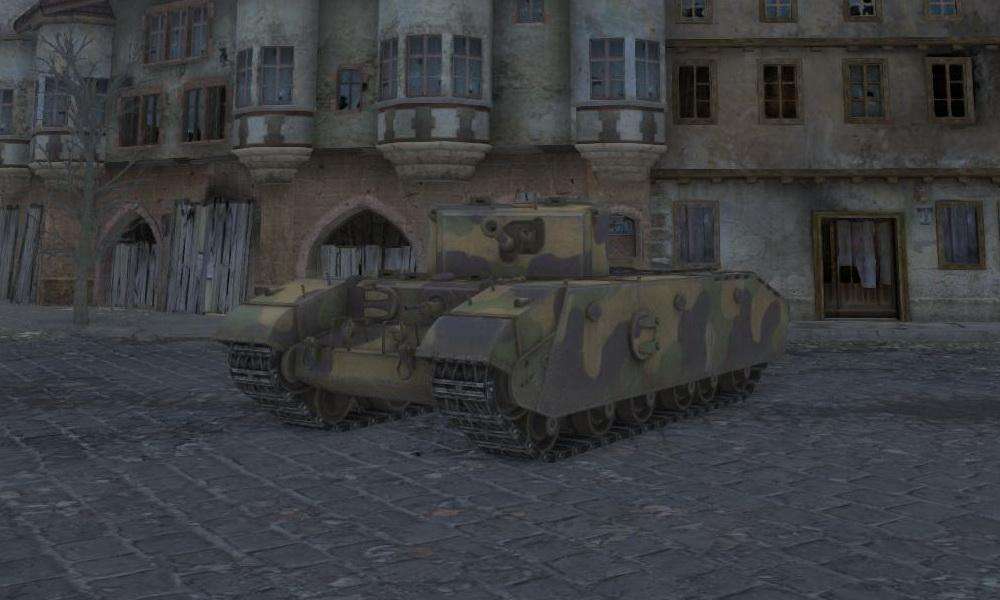
Romanian T-38
The rest were eventually field-repaired by angry Romanian crews. These vehicles were eventually sent to assist Germans at Kuban bridgehead, but Soviet anti-tank guns and infantry made short work of them, knocking out 7 T-38's. After that, the unit had to be recalled back to Crimea, where they took part in several (generally unsuccessful) operations, before being forced to defend Crimea base itself from the Soviets. Until December, the units suffered further losses in what was basically an attrition war, that lasted until 14.5.1944, when Crimea was finally evacuated by the Germans and Romanians.

As I mentioned earlier, the failure of Romanian armored units between 1942-1943 had several reasons. One was insufficient training on very different kind of tanks - Romania had pre-war light tanks, but also relatively modern (at that time) vehicles, such as the StuG III Ausf.G (designated TA by Romanians) and Panzer IV's. The equipment and training were hardly standardized, Romania simply took what they could and the result was varying quality of units, from relatively skilled elite (the core of the old 1st Division, that survived Stalingrad), to absolutely useless (field-trained crews on Crimea for example). Germany had the same problems late in the war however, so this was hardly Romania's fault.
Supply chain never improved throughout the war and apart from some isolated cases where units were motorized relied heavily on horses (again, Romania can be hardly blamed for this, Germany used a lot of hippomobile units too, Germany alone used more than 2,7 million horses throughout the war)
Another problem was that (as demonstrated by the Panzer 38t tanks episode) Romania was completely dependent with supplies on Germany. During the second half of the war, Germany had enough problems of its own, therefore selling only really crappy vehicles to its allies - often belonging battleworn units, who recieved new equipment. The Romanian industry was in no shape to dish out scores of medium tanks (like Hungarians did with their Turán and Toldi vehicles) and the repair facilities were very rudimentary. However, that does not mean there weren't any interesing conversions and attempts. We'll have a look at them now.
Vanatorul de Care R-35/45 (transformat)
This is basically the old Renault R-35 light tank, armed with a Soviet 45mm gun and converted into a tank destroyer. In game terms, we are looking at a tier 2-3 vehicle.
As mentioned in the previous parts, Romania had at its disposal (from various sources) up to 75 of these light tanks. The original R-35 was basically an infantry support vehicle. While classified as light, its armor was quite heavy (up to 40-44mm in frontal parts) and the vehicle was slow, its top speed was cca 23 km/h. It was not very popular (lack of communication equipment, one-man turret, it broke down quite often) and combat-wise (since it had only a short 37mm gun) it was by 1942 completely useless as a light tank. By 1942, having read the German reports on fighting the French R-35 tanks, the Romanians decided they need a serious upgrade.
2nd Armored Regiment command made a proposal to re-arm the R-35 with license built 47mm Schneider cannon, but the ministry of defense preferred the Soviet 45mm 20K L/46 gun (1938 pattern), stocks of which were available on captured T-26 and BT tanks. The project was officially initiated on 12.12.1942 and was given to col.Ghiulai and captain Hogea for supervision. The gun mount was designed in the beginning of 1943, but the idea to add also secondary machinegun armament had to be abandoned, the gun was simply too big. First prototype was ready in February 1943 - the gun was mounted into the modified turret and could be elevated up to 25 degrees, while keeping an 8 degree depression. The ammo was however much bigger than the original 37mm ammo and therefore only 35 rounds could be carried.
After (quick but lackluster, as the vehicle was still powered by the original 80hp Renault V4 engine) trials, the vehicle was accepted into production, respectively the army transferred 30 R-35's to be converted so by the Leonida company workshops. The guns were repaired near Tirgoviste and the final assembly was performed near Ploesti. In June 1944, the 30 vehicles were ready and activated - more were scheduled as second batch, but an allied air-raid destroyed the Leonida factory.
As can be expected, these vehicles were obsolete by the time they came out. They however (as a part of 2nd tank regiment) have seen combat against Germans in Austria and Czechoslovakia in early 1945. After the war, they were unfortunately all scrapped, but one turret was saved and currently is owned by a private collector in Slovakia:
Crew: 2
Weight: 11,7 tons
Armament: 45mm 20K gun
Armor
Front - 40mm (turret 44mm)
Sides - 40mm
Rear - 32mm
Engine: 80hp Renault
Speed: 20 km/h
TACAM R-1
Another later 1942 project was a conversion of R-1 tankettes into tank destroyers carrying the Soviet 45mm model 1942 gun. The name TACAM means "Tun AntiCar pe Afet Mobil" (anti-tank gun on self-propelled mount - SPG). The project to convert 14 remaining R-1 tankettes to a tank destroyer was officialy proposed on 22.11.1943. The project never left the proposal stage, because by the end of 1943, 45mm Soviet guns were simply not powerful enough and stronger gun could not be used because the vehicle was too light to withstand additional weight and recoil. It could theoretically appear in game however, around tier 2.
TACAM T-38
Like the previous project, TACAM T-38 was a proposed conversion from 1943, this time of the Panzer 38(t), into tank destroyers. Basically, it was a project very similiar to Marder III - the difference was that as a standard gun, the Soviet F-22 76,2mm gun was to be used (Romanians had stocks of this gun captured from the first years of the conflict). The armor used was supposed to be salvaged from destroyed Soviet vehicles - however, by the time Romanian engineers got to take this idea seriously, Romania switched sides and was forced by Soviets to return all its captured equipment, including all the F-22 guns, so nothing came of it. In game it could appear at tier 3 as a Marder II equivalent.
TACAM T-60
TACAM T-60 was another interesting war conversion. The idea behind it was the same idea as that one behind Marder and other German light tank destroyer series. By 1942, Germany and its allies started meeting larger amounts of the T-34 tanks and the heavy KV series vehicles, which the German guns (let alone the obsolete Romanian R-2 tanks) couldn't penetrate. Therefore, a combination of light chassis and a powerful gun had to be developed to meet this new threat. Germans had enough experience to build on - and many chassis types, unlike the Romanians, who had to do with what they got.
Early in the war, Romania captured dozens of 76,2mm F-22 division guns from the Soviets. They also captured many T-60 light tanks (as many as 170), and the idea was to mate them together. In 1942, colonel Ghiulai made a proposal for a light tank destroyer by removing the T-60 turrets and installing the F-22 gun on top. Armor was secondary, it was there only to protect the crew from infantry weapons. The T-60 itself had 20-35mm thick armor (depending on the version) and was powered by 70 or 80hp GAZ engine. Until 1943, cca 5800 were made in Soviet Union. There was only one problem with it: it was crap.
It was poorly armored and poorly armed (with a 20mm gun). What was worse for a recon tank: it had no radio. It was inferior to both the LT-35 and LT-38, it had poor terrain passability (especially thru mud) and unpopular with Soviet crews, who nicknamed it "bratskaya mogila na dvojich" (grave for two brothers). When the Germans and Romanians captured it, they weren't very keen on using tanks even the original owner hated and relegated it mostly to training duties or converted them to artillery tractors. Even Romanians, who normally took whatever they could get their hands on, did not intend to use the original vehicles as they were - and so the Romanian command accepted Ghiulai's idea.
In the end, the vehicle recieved 15mm thick superstructure, the aforementioned 76,2mm gun (which could be traversed 32 degrees on each side and had a depression of -5 degrees) and and a machinegun, so that the crew could defend itself from infantry assaults. The suspension was improved too - tougher torsion bars were installed and some engine and interior components were switched for German ones. The crew was increased to 3 men - driver, commander/gunner and loader.
One prototype was built in Leonida workshop from 11/1942 and was ready on 19.1.1943. In the end, very few trials took place before 34 operational T-60's were brought in to Leonida for conversion. It's not clear whether all of these vehicles were captured by Romanians, or whether some were given by Germans. Either way, in 1943 several dozen were made (sources are a bit unclear as to how many, some state 34 were made, some as many as 57) . In 1st half of 1943, 17 were made and they were transferred to the newly forming 1st Divison (initially they were used for training) and another 17 in the 2nd half.
Not much is known about the combat performance of TACAM T-60. It is known that between February and early August 1944, TACAM T-60 vehicles have seen combat (apparently with an unexceptional combat record). Last battles fought by these tanks against the Soviets were between 20-23.8.1944 in Bessarabia and Moldova.
Soon after however, Romania switched sides and that was the end of TACAM T-60. The reason for that was that under the conditions of surrender, Romania was forced to transfer all the previously captured Soviet tech back to Soviet Union. TACAM T-60 was a part of that deal (being based on a Soviet vehicle) and all the TACAM T-60 tanks were transferred to Soviet Union (in October 1944), after which they basically disappeared (most likely they were tested and then scrapped). Romanian sources mention that some of the TACAM's were equipped with the Soviet 57mm ZiS-2 guns. There are also reports of a 105mm howitzer version, but no proof has been found.
Crew: 3
Weight: 9 tons
Armament: 76,2mm F-22 gun
Armor
Front - 35m
Sides - 15mm
Rear - 25mm
Engine: 85hp GAZ-203 or 75hp GAZ-202
Speed: 40 km/h
TACAM R-2
TACAM R-2, much like the TACAM T-60, was an obsolete vehicle conversion, this time - as the name suggests - of the R-2.
By 1943, it was clear to everyone that the day of the light tank is over. With the R-2 tanks being next to useless in their original form, Romanian command was wondering, what to do with them (and of course, what to replace them with).
In Spring 1943, general Constantin Pantazi ordered the remaining R-2 tanks to be converted into self-propelled guns with heavier armament. The person to go to was again colonel Ghiulai, who already proposed and developed the TACAM T-60 conversion. The conversions were again to be undertaken by the Leonida company workshops in Bucharest. Between July and September 1943, a protype vehicle was built. It was - like the TACAM T-60 - armed with the captured Soviet 76,2mm F-22 gun, installed within a 3-sided superstructure, made from armor plates, cut out from captured T-26 and BT tanks and situated in frontal part of the vehicle. That allowed for better recoil compensation and during the firing trials, the vehicle actually did pretty well, despite the fact a Romanian-made "Continescu" ammunition was used. Original gun sights were also replaced with Romanian-made ones (IOR). The vehicle was actually very well developed - its driving performance was practically no different from the original R-2 tank (despite the long gun, that made the vehicle a bit clumsy during trench climbing).
By the end of 1943, comparative trials were held near Suditi - they were successful and Romanian command recommended for all R-2 tanks to be converted this way. However, there was a problem with that - general Mihail Racovita (1st Division) basically blocked the project, because he demanded to recieve replacement tanks for the R-2's first - it took until February 1944 to get the project going again. Another factor were German components (for the original tanks, but also for example crew periscopes), that were delayed constantly - despite that, serial production started by the end of February 1944.
In the meanwhile, the design was modified: the old 1936 F-22 gun was replaced by the 1942 ZiS-3 model with better ballistic properties (30 shells were carried for the gun by the vehicle - 21 HE and 9 AP shells).
Despite all the setbacks, Romanians managed to produce 20 vehicles until the end of June 1944 - 7 of which were transferred to Mihai Bravu training center. There however, Romanian troops were in for a shock - when testing the firepower against late-model T-34, they found out that despite the improved gun, the firepower is not enough. Basically, TACAM R-2 could destroy a T-34 only on 500 meters or less (which was a waste considering the fact that the gun itself had reasonable accuracy at up to 3000 meters). IS-2 tanks were practically invulnerable to it. Furthermore, it was found out that the Romanian optics have serious flaws. In light of these issues, the production was stopped. Alternative gun proposals were considered: the 75mm Resita Md.1943 gun (roughly equal to PaK 40) or Krupp M.1937 88mm gun (there was aven a proposal to convert all the vehicles to flamethrower tanks), but nothing came of it.
After the Romanian defenses collapsed and Romania switched sides (under very hard conditions set by the Soviets, who considered Romania a defeated enemy country), Soviets practically dismantled the Romanian army, leaving only small organizational units (roughly on company level). Those units, that were suspected of being pro-western (not only pro-nazi, but also royalists and officers trained in France) were sent to the front to fight Germans, while pro-Soviet units were kept in Romania to destroy any potential uprisings.
Some of the "unreliable" units were equipped with a few TACAM's. They fought the Germans near Bucharest and near Ploesti in September 1944 (tank detachment of major Victor Popescu). On 4.10.1944, all the remaining Romanian armored units were transferred to the tank group of 4th Romanian Army (Grupul Blindat al Armatei 4 romane), along with 16 remaining TACAM R-2 vehicles. This unit fought Germans and Hungarians and fought its way into Hungary to river Tis, where it was disbanded in November 1944. 10 TACAM R-2 vehicles were lost.
The swan song of TACAM R-2 would be the Czechoslovakia and Austria campaign, where 2nd Tank Regiment under Stan Zatreanu fought the Germans. By 20.4.1945, only 2 TACAM R-2's remained operational with the unit. As far as it is known, only one TACAM R-2 survived until today, it is in the national museum in Bucharest.
Crew: 3
Weight: 12 tons
Armament: 76,2mm ZiS-3 gun
Armor
Front - 25mm (17mm superstructure)
Sides - 12mm
Rear - 12mm
Engine: Škoda II, 120hp
Speed: 25-30 km/h
Maresal
When talking about Romanian vehicles, one cannot pass the Maresal, probably the most known Romanian vehicle. It was an interesting line of prototypes in any case.
Named "marshall" after Romania's wartime leader marshall Ion Antonescu, the Maresal was Romania's attempt to produce an indigenous light tank destroyer. In December 1942, along with various existing vehicle conversions, Antonescu decided Romania would attempt to construct a tank destroyer of its own, based on the experience gained in conflict with Soviet Union and on the fact that it was clear Romania cannot simply rely on Germany to provide its vehicles.
The new project was supposed to be quick and nimble platform carrying a powerful gun, yet simple enough for Romanian undeveloped industry to produce. The design was a producet of a committee (of which colonel Ghiulai was a part of, naturally - other members were not only soldiers, but for example also the director of Rogifer (former Malaxa) company). The result was the initial M-00 Maresal project.
The early Maresal incarnation (M-00) was basically a captured Soviet 122mm M1910/1930 howitzer and a coaxial ZB-53 7,92mm MG, mounted on a T-60 based chassis (it's the upper picture above). The turret and original chassis was replaced by a turtle-shaped construction and it was powered by a Ford V8 85hp engine (remember that fact that there was a Ford car company in Romania? No coincidence.) The prototype was finished remarkably quickly (1st half of 1943) and was tested for the first time on 30.7.1943. Engineers were concerned about the stability of the vehicle before the trials - these concerns proved to be false, the vehicle was stable enough, but many other serious flaws were discovered - mostly connected with fragile gun mount, too big a recoil and too weak an engine. However, as a general concept, it was sound.
By that time, the project was politically "hot", because it recieved direct support from Antonescu - he kept an eye on it personally thru a special committee, subjected only to him. Rogifer (earlier Malaxa) designer team produced 3 new prototypes (designated M-01, M-02 and M-03) from July to October 1943. In shape, they were roughly similiar to the M-00, but the M-01 and M-02 prototypes were bigger, their T-60 suspension was further reinforced and they were equipped with 120hp Buick engines. The gun remained the same however and so did the 20-30mm armor. M-03 however had a modified Rogifer suspension (based on T-60 but longer and wider), reinforced construction, better gun mount, but only 10mm of armor. All the prototypes were planned with a 2 man crew. It's worth noting that special HEAT HL (Hochladung) 122mm shells were developed, probably by the Germans.
These three prototypes were tested on 23.10.1943 in Suditi (with Antonescu present). The trials however proved again that the gun is simply way too heavy and powerful for the fragile T-60 chassis. The very same day, Antonescu was present during the new Resita 75mm Model 1943 tests - the gun proved to have very good anti-tank properties and one of the Maresal designers proposed to replace the 122mm howitzer with the 75mm gun.
Engine was another problem (Ford and Buick engines weren't exactly growing on trees) - the designers had to look elsewhere. In the end, Hotchkiss 120hp engine was selected and Romania ordered 1000 of those engines in France. At the same time, Rogifer company representatives made a trip to Germany, where they visited several tank plants and basically found out that when it comes to development based on war experience, both they and the Germans were thinking in the same direction and - much to their surprise - found also out their own project is in some respects better than the German ones.
Either way, the result of these events was the M-04 prototype - with the 75mm Resita gun and 120hp engine. By December 1943, preparations were being made to produce it en masse.
By that time, Maresal drew the attention of Heereswaffenamt and Adolf Hitler himself, because on 13.12.1943, he approved the BMM proposal for Jagdpanzer 38t "Hetzer" development. During their personal meeting, Antonescu bragged to Hitler about this new weapon. Hitler - who loved to keep in touch with weapons development, which was usually a big problem for the developers - asked for the Maresal plans, which he got in early January 1944. He passed it to BMM, Czechoslovak engineers had a look at it and either incorporated some of its features to their own design (notably the heavy frontal armor slope), or were at least inspired by it.
The difference between Maresal and 38t was that thanks to the experience of Czechoslovak engineers and workers and the availability of 38t suspensions, the Hetzer production could be started practically immediately (and it was), while the Romanian engineers had to overcome all sorts of problems. Thus, by the time first Hetzers were reaching frontal units in July 1944, Maresal production was not even started yet.
The biggest problem for Romanian engineers were raw materials. While the 3rd Reich could simply tap its captured territories, Romania had to order things all over the world in order not to interfere with German production. This caused further delays in development and planned production.
The M-04 prototype itself was tested in February 1944 with generally positive results (as confirmed by German representatives, present at the site). However, in March 1944, a decision was made to switch the platform, because the 38t suspension was simply better than the T-60 one (M-05 and M-06 prototypes were built on 38t, see the lower picture above). A cooperation of Romanian and German engineers from Vomag and Alkett decided the vehicle would have the French engine, Czechoslovak BMM suspension and Romanian gun and superstructure, with German optics and radio. A prototype was built very quickly (political support did wonders even then) and was tested in May 1944. In July it was presented to Antonescu and tested. During the trials it was compared to StuG III Ausf.G - Maresal came up ahead.
Already back in May 1944, it was decided to serially produce the vehicle - but in such numbers it was completely unrealistic for the industry to fulfill the demand. Preparations for production were made nonetheless (of the improved M-06 model, that was identical to M-05 apart from some technological changes in gun mount) and on 8.6.1944, a contract was signed between Romania and Germany, promising Romanians 10 brand new 38t suspensions and the license to build the 160hp Praga AC engine (the Hotchkiss plant was devastated by an air raid). Both the Hetzer and the Maresal were to be produced simultaneously and there was even a plan to equip Maresal with the 220hp Tatra T-103 engine.
All that came to naught however. Germans were slow in providing any material, the vehicle production was delayed further and further (mostly by air raids) and in the end, the production was not started before Romania surrendered to Soviet Union. By August 1944, when the project was cancelled, practically all the trials were completed on the M-05 prototype and the assembly of first 10 vehicles was about to begin. In September 1944, the Soviets ordered Romania to get rid of the project completely - they confiscated all the plans and the M-05 prototype and that was the end of the Maresal. What happened to the prototype is unknown.
Crew: 2
Weight: 6,7 (M-00 to M-04) tons to 10 tons (M-05)
Armament: 122mm M1910/1930, 75mm Resita
Armor
Front - 10-30m
Sides - 20mm
Rear - 20mm
Engine: Renault 120hp, Ford 120hp, Buick 120hp with upgrades (160, 220hp)
Speed: 40-45 km/h
Epilogue
Romanian Army (even more so than the Germans) never recovered from Stalingrad. The vehicle losses were simply too high and there were no tanks available as replacements. Many - if not most - experienced crews were captured or they died in combat. From 1943 on, Romania was on defensive, losing more and more vehicles and men until its surrender to the Soviets.
After the surrender, Romanian armor was drastically reduced in size. Some units were sent to fight Germans and Hungarians and they made it as far as Slovakia. Either way, one can safely say that Romanian soliders and tankers, despite the hardships, fought just as well as the soldiers of any other army. They were plagued by the problems mentioned in this article, yes - but considering that, they did very well and the designer teams did whatever they could under the circumstances. And so, while the Romanian tanks might not be the best on the battlefield, they do deserve their chapter in WW2 tank history books.